
Key takeaways
- EEG records brain waves safely and painlessly using scalp sensors.
- EEG helps diagnose seizures, but it doesn’t show brain structure or diagnose mental illness alone.
- Routine EEGs are typically brief; ambulatory EEG can monitor over longer periods.
An EEG scan of the brain records your brain’s electrical activity using small sensors on the scalp. It helps doctors evaluate seizures, fainting spells, sleep problems, and overall brain function. EEG is safe, painless, and involves no radiation, giving real-time insight into how your brain works.
What is an EEG scan of the brain?
An EEG (electroencephalogram) measures the brain’s electrical activity through sensors placed on the scalp, showing patterns called brain waves. It helps identify abnormal rhythms linked to seizures and other conditions. EEG uses electrodes to record brain signals and does not deliver electricity or shocks.
EEG results are often combined with your symptoms and exam findings. In some cases, EEG helps differentiate seizures from other events like fainting or migraine, or helps guide treatment for known epilepsy.
Who might need an EEG, and why?
EEG is commonly ordered when someone has a first-time seizure, suspected epilepsy, unexplained spells of confusion or fainting, or certain sleep issues. Epilepsy affects many people, making EEG a common and important test.
EEG can also help evaluate brain inflammation, head injury effects, or encephalopathy (diffuse brain dysfunction). EEG is a key test used to help diagnose epilepsy and can aid in monitoring treatment response over time.
What does an EEG show — and what it doesn’t?
EEG shows the timing and pattern of brain waves. It can reveal abnormal spikes or waves suggestive of seizure risk, and it can track changes during sleep, light stimulation, or deep breathing. EEG detects electrical abnormalities that may be linked with seizure disorders and other brain problems.
EEG does not show brain structure. It cannot replace MRI or CT scans, which show anatomy. Nor is EEG a stand-alone test for mental health conditions; it does not diagnose anxiety or depression by itself. Your provider interprets EEG alongside your history, exam, and, if needed, imaging.
What types of EEG are there?
Different EEG types are chosen based on your symptoms and how often events occur. Common options include:
- Routine EEG: Often used for an initial evaluation of spells or seizures in an outpatient setting; typically brief.
- Sleep-deprived EEG: Similar to a routine EEG but done after limited sleep to increase the chance of detecting abnormalities.
- Ambulatory EEG: Portable equipment records at home to help capture infrequent events over an extended period.
- Video EEG monitoring: Continuous EEG with video in a monitored setting to match symptoms with EEG changes during longer evaluations.
How do you prepare, and what happens during the test?
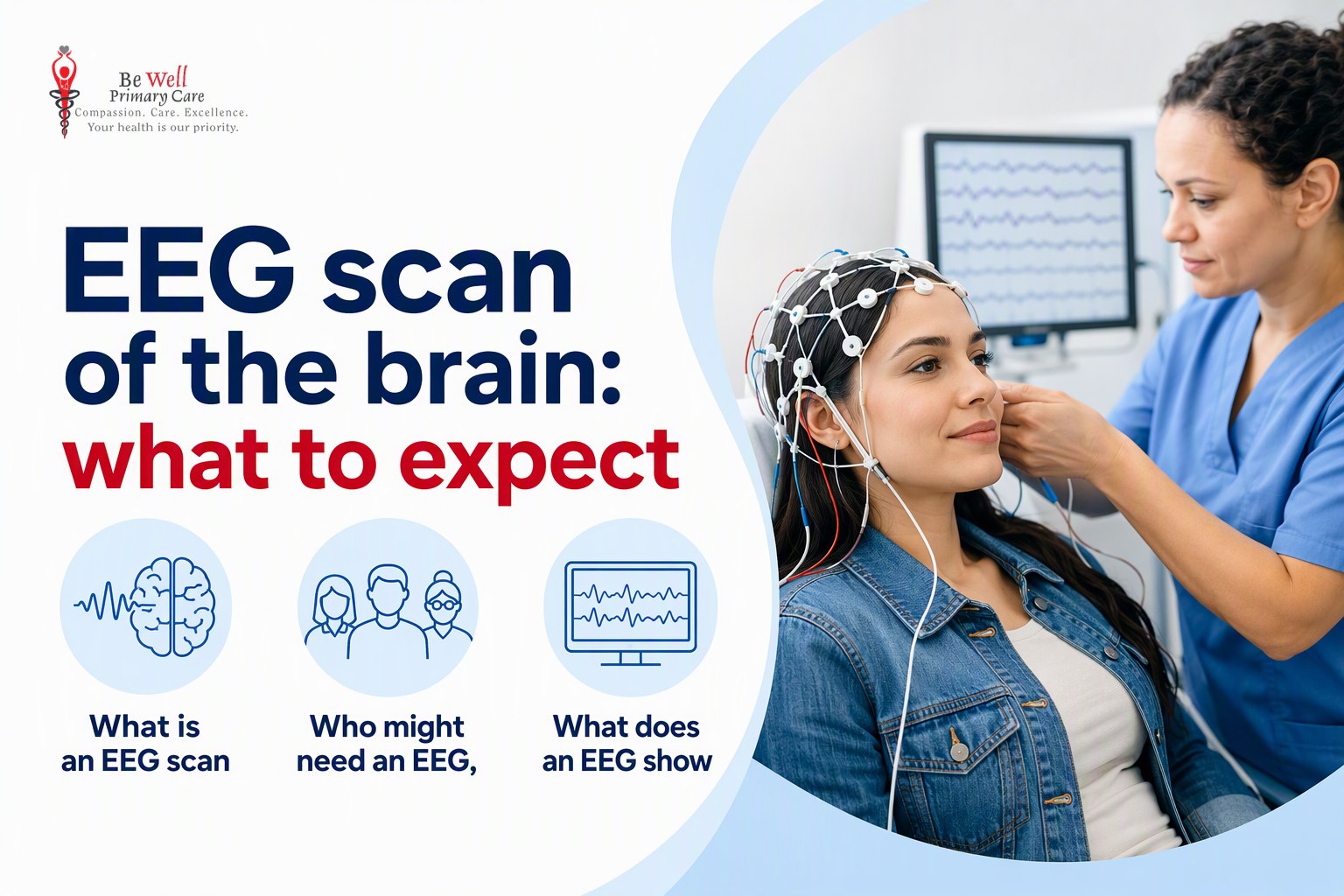
Preparation is simple: arrive with clean, dry hair and avoid heavy hair products. You may be asked to limit caffeine. During the test, a technologist places small sensors with paste or sticky pads on your scalp.
You will relax with your eyes open and closed while the machine records brain waves. You may be asked to breathe deeply (hyperventilate) or look at flashing lights (photic stimulation) to see how your brain responds. If you fall asleep, the EEG captures useful sleep-related patterns, too.
If you’re curious about other nervous system testing, see our overview of the autonomic nervous system test: what to expect.
Are there risks or side effects?
EEG is very safe. The sensors only record activity; they don’t deliver electricity. Skin under the sensors might feel mildly irritated after the test. Flashing lights or deep breathing can rarely trigger a seizure in people with epilepsy, which is why trained staff supervise.
If an event occurs during EEG, that information is valuable for diagnosis. The team is prepared to act if needed, and safety measures are in place.
How much does an EEG cost, and is it covered by insurance?
Costs vary by setting, type (routine vs. ambulatory vs. inpatient video), and your insurance plan. Many health plans cover EEG when medically necessary. Ask your insurer about referral requirements and potential copays. EEG is a standard diagnostic tool for seizures and other neurologic issues; your provider can document medical need.
If you need care coordination, your primary care provider can help you navigate referrals and insurance steps. You can also learn more about choosing a primary care provider.
How Be Well Primary Care can help
At Be Well Primary Care, we evaluate symptoms like new seizures, fainting, or unexplained spells and coordinate next steps.
We can order appropriate referrals for EEG and neurology when indicated and help you prepare for testing. Contact us to schedule a visit, and we’ll help coordinate your care and follow-up.
Frequently asked questions
Is an EEG painful or dangerous?
EEG is safe and painless. The sensors record your brain’s activity but do not deliver electricity. Some people may feel mild scalp irritation from the paste, and flashing lights can rarely provoke a seizure in those with epilepsy under supervision.
Can an EEG diagnose epilepsy by itself?
An EEG can support an epilepsy diagnosis by showing seizure‑type patterns, but it’s only one piece. Doctors combine EEG results with your history, exam, and sometimes imaging. EEG detects abnormal electrical activity, yet a normal EEG does not completely rule out epilepsy when symptoms suggest it.
What should I avoid before an EEG?
Arrive with clean, dry hair, and avoid heavy hair products. Many centers advise limiting caffeine before the test. You may be asked to do deep breathing or view flashing lights during EEG, so follow the lab’s instructions and bring a list of medicines for your technologist.
How long does a routine EEG take, and who reads it?
A routine EEG is typically brief, and a neurologist interprets the recording. Your provider will review the report with you and decide if additional testing, such as ambulatory or video EEG, is needed.
Will an EEG show anxiety or depression?
EEG measures electrical activity, not emotions. It is not used alone to diagnose anxiety or depression. EEG helps detect seizure‑related changes and other brain electrical problems, while mental health diagnoses rely on clinical evaluation, history, and validated questionnaires.
Does Be Well Primary Care perform EEGs on-site at Alliance – Fort Worth?
Be Well Primary Care evaluates symptoms and coordinates appropriate referrals to EEG testing when indicated. We’ll guide you on preparation and follow-up, and we coordinate results back to your provider.
Does Be Well Primary Care accept Medicare or insurance for EEG-related visits?
We can help with evaluation and referrals related to EEG. Coverage varies by plan; many insurers cover medically necessary diagnostics. Call to confirm your benefits and scheduling options.
What does an EEG measure in the brain?
An EEG measures the brain’s electrical activity through scalp sensors, showing patterns called brain waves. It captures changes over time, helping identify abnormal rhythms linked to seizures or other conditions. The electrodes only record signals and do not deliver electricity or shocks.
Can brain waves show mental illness?
EEG can show electrical abnormalities but is not a stand‑alone test for mental health conditions. It’s primarily used to evaluate seizures, sleep issues, and other neurologic problems. Mental health diagnoses rely on clinical assessment, not EEG patterns alone.
What does a normal EEG look like?
A normal EEG shows organized brain waves that vary with wakefulness and sleep, without abnormal spikes or sharp waves. Patterns change with eye opening, breathing, and sleep stages. Normal findings still must be interpreted in context of symptoms, since a normal EEG doesn’t rule out all disorders.
This article is for general education and is not a substitute for professional medical advice, diagnosis, or treatment. For guidance about your own health, talk with your doctor — or schedule a visit with Be Well Primary Care at any of our six North Texas locations.