
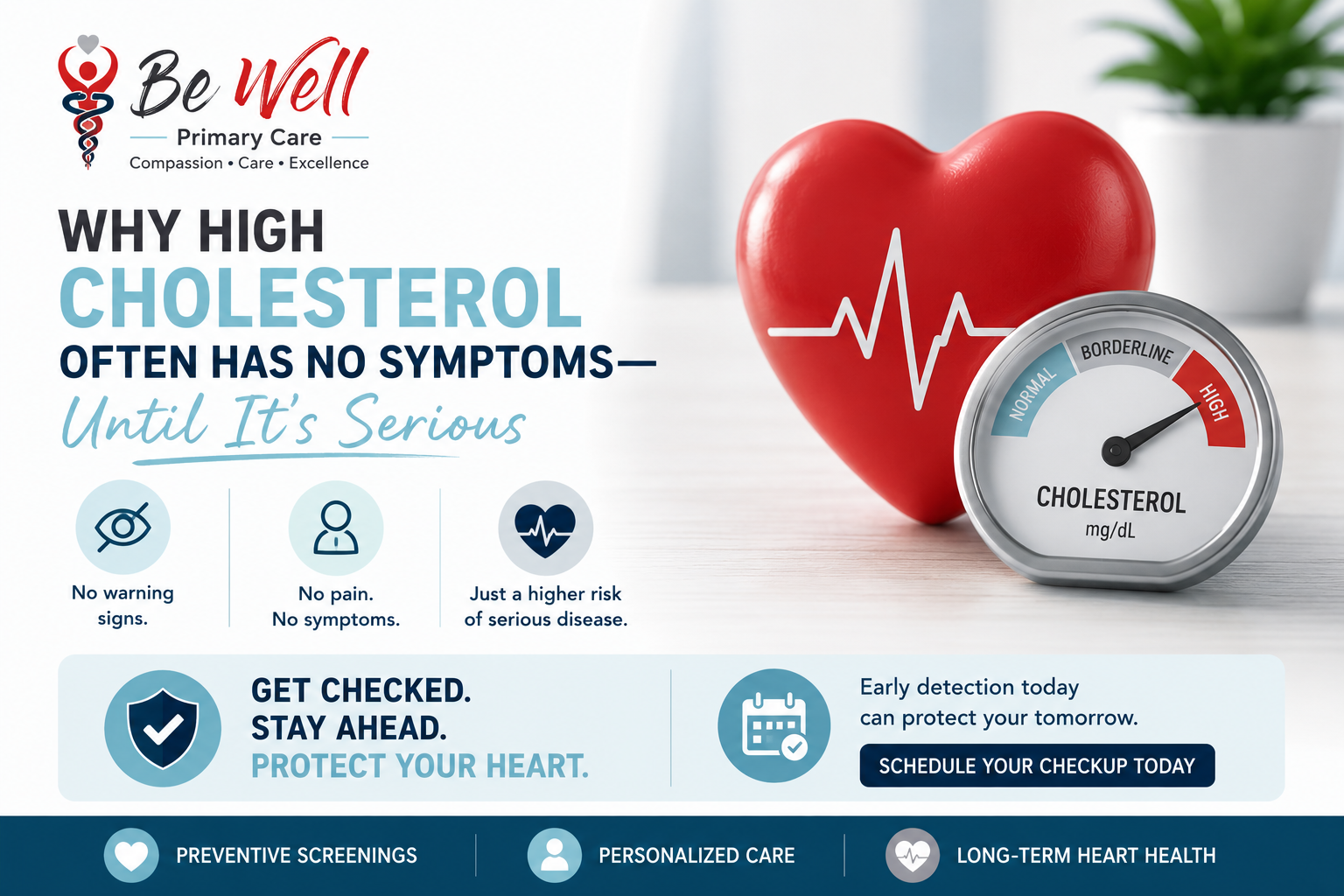
High cholesterol is one of the most common health conditions in the United States — and one of the easiest to ignore.
Why?
Because most people feel completely normal.
There are usually no warning signs, pain, or obvious symptoms until serious complications begin to develop. That’s why high cholesterol is often called a “silent” health risk.
What Is Cholesterol?
Cholesterol is a fatty substance your body uses to:
- Build cells
- Produce hormones
- Support normal body function
Your body needs some cholesterol to stay healthy. However, when cholesterol levels become too high — especially LDL (“bad”) cholesterol — plaque can begin building up inside your arteries.
Over time, this buildup may restrict blood flow and increase the risk of:
- Heart disease
- Stroke
- High blood pressure
- Heart attack
The Problem With Silent Conditions
Many people assume they would “feel” high cholesterol.
In reality, most do not.
You can have elevated cholesterol for years without knowing it. That’s why regular screenings and preventive care are so important.
Common Risk Factors
You may be at higher risk for high cholesterol if you:
- Eat a diet high in processed foods
- Have a family history of heart disease
- Have diabetes or high blood sugar
- Are overweight
- Don’t exercise regularly
- Smoke or experience chronic stress
Even healthy-looking individuals can have cholesterol issues.
Why Early Detection Matters
The earlier high cholesterol is identified, the easier it is to manage.
Treatment may include:
- Lifestyle changes
- Improved nutrition
- Regular exercise
- Personalized medical care
Early intervention can significantly improve long-term heart health and reduce future complications.
Ignoring high cholesterol can allow silent damage to continue over time.
The Bottom Line
High cholesterol often has no symptoms — but damage can still be happening behind the scenes.
The good news?
With early detection and the right care plan, cholesterol problems are highly manageable.
Take the Next Step
At Be Well Primary Care, we focus on prevention and early detection to help patients stay ahead of chronic disease.
If you haven’t checked your cholesterol recently, now is the time.
We Offer:
- Preventive screenings
- Personalized care plans
- Long-term heart health support
Protect your heart before symptoms appear.
Why Heartburn Shouldn’t Be Ignored
Almost everyone experiences heartburn occasionally.
But if it’s happening frequently, it may be more than just something you ate.
Persistent heartburn can be a sign of acid reflux or GERD (Gastroesophageal Reflux Disease) — a condition affecting millions of Americans.
Common Symptoms of Heartburn
Heartburn may cause:
- Burning in the chest
- Sour taste in the mouth
- Bloating after meals
- Discomfort when lying down
- Chronic throat irritation or cough
Many people rely on over-the-counter medications without addressing the root cause.
Why It Matters
Untreated reflux can lead to inflammation and long-term damage to the esophagus.
In some cases, chronic GERD may increase the risk of more serious digestive complications.
That’s why persistent symptoms should never be ignored.
Common Triggers
Heartburn is often linked to:
- Large meals
- Spicy or fatty foods
- Stress
- Obesity
- Alcohol or smoking
- Eating late at night
Lifestyle habits can significantly affect digestive health.
When to Seek Medical Care
You should consider a medical evaluation if:
- Symptoms occur more than twice weekly
- Over-the-counter medications stop helping
- You experience abdominal pain
- You have difficulty swallowing
- Symptoms disrupt sleep or daily life
Early treatment can help prevent complications.
The Bottom Line
Occasional heartburn may be common — but frequent symptoms are not something to ignore.
Understanding the cause is the first step toward long-term relief.
Take the Next Step
At Be Well Primary Care, we help patients identify and treat digestive issues before they become more serious.
We Offer:
- Personalized digestive care
- Preventive health evaluations
- Long-term wellness support
Feel better. Eat better. Live better.
Anxiety, Stress, and Your Physical Health: The Connection Most People Miss
Stress and anxiety don’t just affect your mind — they affect your entire body.
Many people experience physical symptoms every day without realizing stress may be playing a major role.
Anxiety Can Cause Physical Symptoms
Chronic stress and anxiety may contribute to:
- Fatigue
- Brain fog
- Chest tightness
- Rapid heartbeat
- Headaches
- Digestive issues
- Trouble sleeping
Over time, ongoing stress can affect both mental and physical health.
Why Chronic Stress Matters
When your body remains in “fight or flight” mode for long periods, stress hormones like cortisol stay elevated.
This can negatively impact:
- Blood pressure
- Blood sugar
- Sleep quality
- Weight
- Immune function
Stress doesn’t just affect how you feel — it affects how your body functions.
Signs You Shouldn’t Ignore
You may benefit from professional support if you:
- Feel overwhelmed constantly
- Experience ongoing fatigue
- Struggle with sleep
- Feel anxious daily
- Have difficulty concentrating
Mental health is health.
The Importance of Early Support
Ignoring anxiety and chronic stress can worsen symptoms over time.
The earlier you address it, the easier it becomes to improve both emotional and physical well-being.
The Bottom Line
You are not supposed to feel exhausted, overwhelmed, and stressed all the time.
Your body may be telling you it needs support.
Take the Next Step
At Be Well Primary Care, we believe mental and physical health go hand in hand.
If stress, anxiety, or burnout are affecting your daily life, we’re here to help.
We Offer:
- Whole-person care
- Preventive wellness support
- Personalized treatment plans
Your health matters — mind and body.