
Blog

Dermal fillers for Ozempic face: options and results
Dermal fillers can restore volume and soften “Ozempic face.” Learn safe options, expected results, and what a visit involves at our Fort Worth clinic.

Elite physicals in Denton: What’s included and Why
Elite physicals bundle advanced screenings in one coordinated visit. See what’s included at our Denton clinic, who benefits, and how to prepare.

Juvéderm lip fillers: results, safety, and what to expect
Considering Juvéderm lip fillers? Learn what they are, who’s a good candidate, safety, side effects, and how long results can last.

Elite Physicals – Why Comprehensive Physical Exams Are Essential for Long-Term Health
Many people only seek medical care when symptoms appear. However, some of the most serious health conditions develop quietly, often without noticeable warning signs. Routine physical exams are one of the most valuable tools for protecting your long-term health. At Be...

The Benefits Of Having A Primary Care Provider
Many people wait until they’re sick to see a doctor. But healthcare works best when you have a trusted provider who knows your health history and helps you stay well all year long. That’s the role of a primary care provider (PCP). A primary care provider is often your...
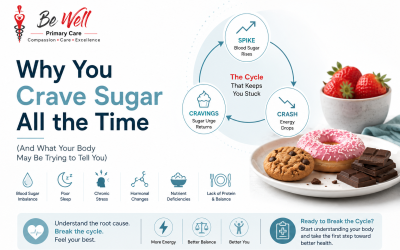
Why You Crave Sugar All the Time (And What Your Body May Be Trying to Tell You)
You tell yourself you’ll avoid sugar today. But by the afternoon, the cravings hit again: Something sweet Something quick Something that gives you energy At first, it can feel like a lack of discipline.But constant sugar cravings are often connected to something...
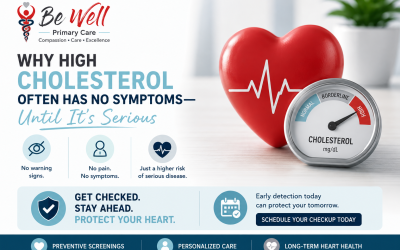
Why High Cholesterol Often Has No Symptoms — Until It’s Serious
High cholesterol is one of the most common health conditions in the United States — and one of the easiest to ignore. Why?Because most people feel completely normal. There are usually no warning signs, pain, or obvious symptoms until serious complications begin to...
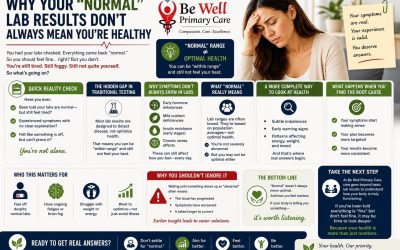
Why Your “Normal” Lab Results Don’t Always Mean You’re Healthy
You had your labs checked.
Everything came back “normal.”
So you should feel fine… right?
But you don’t.
You’re still tired.
Still foggy.
Still not quite yourself.
So what’s going on?
The Hidden Gap in Traditional Testing
Most lab results are designed to detect disease.
Not optimize health.
That means:
You can be “within range”
And still not feel your best
What “Normal” Really Means
Lab ranges are often broad.
They’re based on population averages—not optimal health.
So when your results come back “normal,” it often means:
You’re not severely abnormal
But you may not be optimal either
Quick Reality Check
Have you ever:
Been told your labs are normal—but still feel tired?
Experienced symptoms with no clear explanation?
Felt like something is oƯ, but can’t prove it?
You’re not alone.
Why Symptoms Don’t Always Show in Labs
Many common issues don’t immediately appear in standard testing:
Early hormone imbalances
Mild nutrient deficiencies
Insulin resistance (early stages)
Chronic stress eƯects
These can still aƯect how you feel—every day.
The Problem With “You’re Fine”
Hearing “everything looks normal” can be frustrating.
Because:
Your symptoms are real
Your experience is valid
But you’re left without answers
That gap leads many people to stop searching.
A More Complete Way to Look at Health
Instead of just asking:
“Is something wrong?”
A better question is:
“Is everything working optimally?”
What Deeper Evaluation Can Reveal
When you look beyond basic labs, you may uncover:
Subtle imbalances
Early warning signs
Patterns aƯecting energy, weight, and mood
And that’s where real answers begin.
What Happens When You Find the Root Cause
When you stop relying only on “normal ranges” and start understanding your body:
Your symptoms start making sense
Your plan becomes more targeted
Your results become more consistent
Who This Matters For
This is especially important if you:
Feel oƯ despite normal labs
Have ongoing fatigue or brain fog
Struggle with weight or energy
Want to optimize—not just avoid illness
Why You Shouldn’t Ignore It
Waiting until something shows up as “abnormal” often means:
The issue has progressed
Symptoms have worsened
It takes longer to correct
Earlier insight leads to easier solutions.
The Bottom Line
“Normal” doesn’t always mean optimal.
And how you feel matters.
If your body is telling you something—
It’s worth listening.
Take the Next Step
At Be Well Primary Care, care goes beyond basic lab results to understand how your body is
truly functioning.
If you’ve been told everything is “fine” but don’t feel fine, it may be time to look deeper.
Because your health is more than just numbers.
Ready to Get Real Answers?
Don’t settle for “normal.”
Aim for better.
Feel better.
Be better.
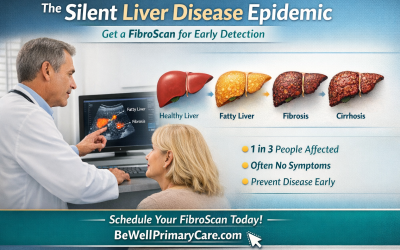
The Silent Liver Disease Epidemic Why You Should Consider a FibroScan
For decades, liver disease was commonly associated with heavy alcohol use.That’s no longer the case. Today, one of the fastest-growing health threats in the world is fatty liver disease in people who don’t drink at all and most don’t even know they have it. A Growing...
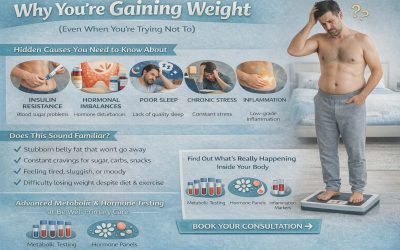
Why You’re Gaining Weight (Even When You’re Trying Not To)
If you feel like you’re doing everything right—eating less, moving more—but the scale won’t budge…You’re not imagining it. Weight gain isn’t always about willpower.In many cases, it’s a sign of underlying metabolic or hormonal imbalance. It’s Not Just About Calories...